Discussing the Economic and Fiscal Impacts of Mass Deportation in Harlem
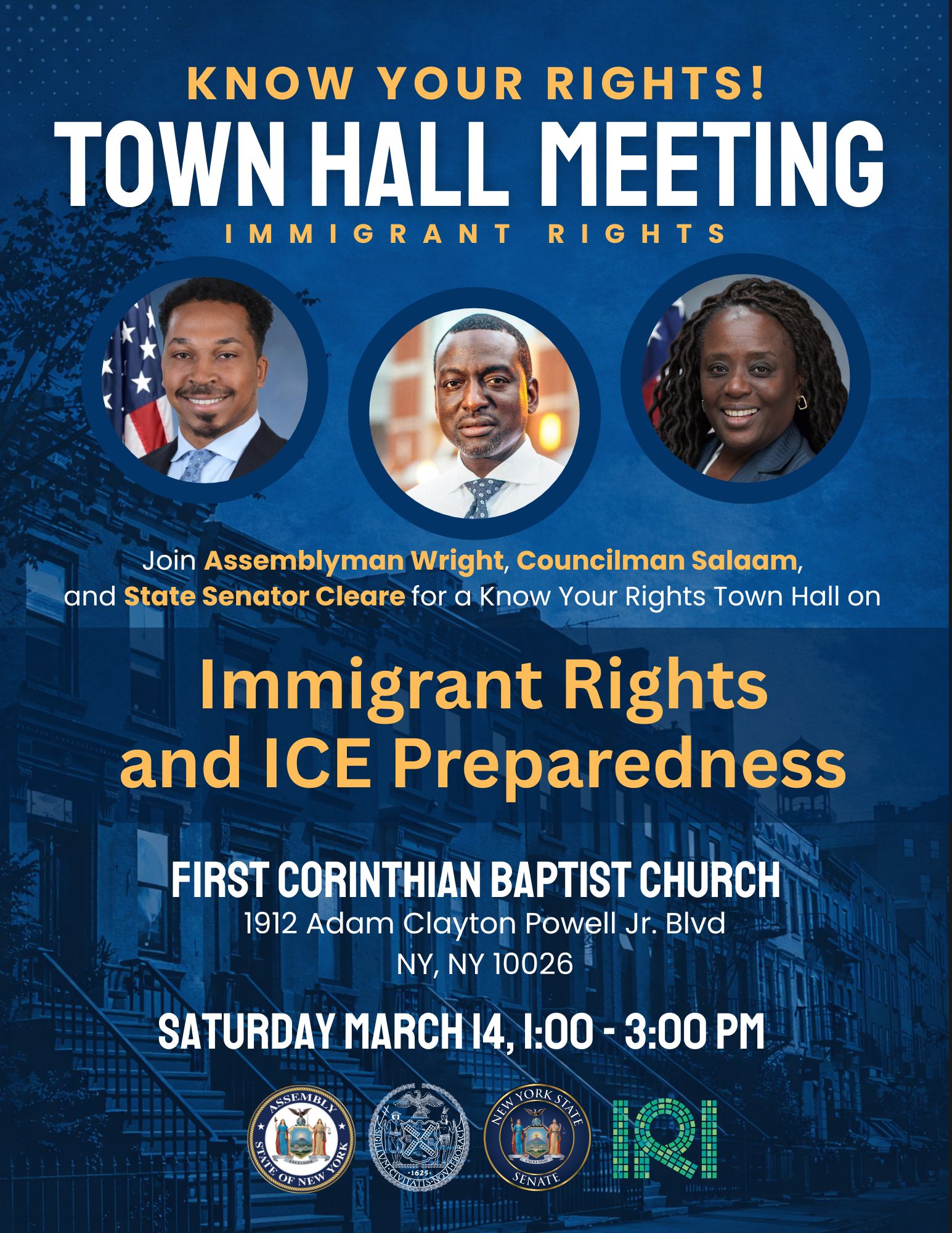
Immigration Research Initiative’s Senior Policy Analyst, Shamier Settle, joined Assemblyman Wright, Councilman Salaam, and Sate Senator Cleare for a Town Hall discussion in Harlem on Saturday, March 14th, 2026 at 1pm.
During this event Settle discussed how the Trump Administration is actively pursing its goal of an unprecedented intensity of enforcement actions aimed at removing immigrants from their communities, their workplace, and often from their families. In many cases this results in deportations, in many others it means indefinite incarceration in detention centers. The new administration is also working to radically reduce the number of new immigrants allowed into the country, and to strip some immigrants of status they currently hold.
The immigrants most vulnerable are those who are undocumented. But the impact does not end there. People who have temporary visas may see them terminated or unrenewed. People with temporary protected status, asylum seekers, DACA recipients, and many others are also in a precarious position.
There are far-reaching social and humanitarian implications of this type of enforcement regime. But there is also an economic risk that can be quantified.
Immigrants are a vital part of the New York State economy
- There are 4.5 million immigrants in New York State, including 1.8 million who are non-citizens, and among those an estimated 670,000 who are undocumented. 1
- Non-citizens include green card holders, as well as a number of people who are at risk of deportation or removal of immigration status, including those who are undocumented, people eligible for Temporary Protected Status, DACA recipients, H1-B and H2-A visa holders, asylum seekers, and others.
Economic risks to Harlem and New York City, of increased immigration enforcement and mass deportations, including:
- Reports indicate that ICE increasingly uses racial profiling, impacting both Black immigrants and U.S.-born African Americans. In October 2025, a reported ICE “Operation Midway Blitz” in a predominately Black Chicago neighborhood resulted in the detention of both immigrants and U.S. citizens.
- Potential risks to occupations with a large percentage of immigrant workers, such as construction laborers, doctors, maids, and nurses.
- Job losses for US-born workers in roles that are adjacent to immigrant workers, such as in restaurants or hotels.
- Challenges for families that rely on childcare or home health aides.
- A loss in state and local tax revenue paid by immigrants who are undocumented. People who are undocumented currently pay $3.1 billion in state and local taxes, an important addition at a time when New York is experiencing tight budgets.3
Harlem has long prided itself as a welcoming neighborhood—one that values and respects migrants and recognizes their immense contributions to our economy, communities, and culture.