The Economic and Fiscal Impacts of Hostility to Immigrants: What’s at Risk in Tennessee
When ICE and other federal enforcement agents stormed into Minnesota, Oregon, Illinois, and Washington DC, among other areas, local and state officials have expressed outrage and resisted the incursion and dramatic disruption of their communities.
In Tennessee, state lawmakers are taking the opposite approach, working directly with President Trump’s deputy chief of staff, Stephen Miller, to create state policies that add to the tools of civil federal immigration enforcement and targeting of immigrants. Introducing a series of anti-immigrant bills in January, Tennessee house speaker Cameron Sexton said, “We’re going to do what we can to make sure that if you’re here illegally, we will have the data, we will have the transparency, and we’re not spending taxpayer dollars on you unless you’re in jail.”1For the quotation from Sexton and summaries of the proposals, see articles in the Knoxville News Sentinel and Nashville Banner.
The Tennessee bills are sweeping in scope. Among them are bills that seek to deny undocumented K-12 students access to an education, shield information about immigration enforcement operations from public records and disclosure, deny professional licenses to anyone without a green card or U.S. citizenship, require that the driving test to be in English only, and stand up new surveillance apparatus to track and report the identity of undocumented Tennesseans to ICE.
There are far-reaching social and humanitarian implications of this type of enforcement regime, as well as constitutional questions about the bills. But there is also an economic risk that can be quantified. This report was funded by the Dan and Margaret Maddox Fund with the aim of helping to better understand the implications of the proposed legislation on immigrant families.
Of the 7.2 million people who live in Tennessee, 473,000 are immigrants, making up seven percent of the total population, according to the most recent American Community Survey, from 2024. In East Tennessee, the immigrant share of population is four percent, in Middle Tennessee eight percent, and in West Tennessee five percent.2The population share by region of the state is based on an analysis of the 2023 American Community Survey 5-year data, to allow for more detailed analysis of local areas than is possible with the 2024 1-year data. Regions of the state are defined by county following the Tennessee’s Department of General Services definitions.
The immigrants most vulnerable to combined state and federal exclusions and radical new enforcement measures are those who are undocumented. But the impact does not end there. People who have temporary visas are seeing them terminated or unrenewed. People with temporary protected status, asylum seekers, DACA recipients, and many others are seeing those statuses revoked or threatened.
This report details the economic risks to Tennessee of increased immigration enforcement and mass deportations, including:
- Potential risks to occupations with a large percentage of immigrant workers, such as construction laborers, doctors, maids, and nurses;
- Job losses for US-born workers in roles that are adjacent to immigrant workers, such as in restaurants or hotels;
- Challenges for families that rely on childcare or home health aides;
- A loss in state and local tax revenue paid by immigrants who are undocumented that could be as much as $314 million, at a time when Tennessee is experiencing tight budgets.3Carl Davis, Marco Guzman, and Emma Sifre, “Tax Payments by Undocumented Immigrants,” Institute on Taxation and Economic Policy, July 30, 2024.
Tennessee has long prided itself as a welcoming state—one that values and respects immigrants and recognizes their immense contributions to our economy, communities, and culture.
Both immigrants who are undocumented and those with legal status are at risk for deportation
Of the than 473,000 immigrants who live in Tennessee, 286,000 people were non-citizens in 2024. An estimated 180,000 immigrants in Tennessee were undocumented.4The total population, number of immigrants, and number of non-citizens is drawn from an Immigration Research Initiative analysis of the 2024 American Community Survey, the most recent detailed data available. The estimate of immigrants who are undocumented is shown in the Immigration Research Initiative fact sheet, “50 States: Immigrants by Number and Share.” The three leading sources of estimates of people who are undocumented are shown there, from the Pew Research Center, the Center for Migration Studies, and the Migration Policy Institute; all three use 2023 data for their most recent estimates. For Tennessee, all three estimates are 180,000 plus or minus 10,000 (ranging from 176,000 to 190,000). The other non-citizen immigrants have a range of legal statuses, including legal permanent residents (green card holders), Temporary Protected Status (TPS) recipients, student visa holders, Deferred Action for Childhood Arrivals (DACA) recipients, asylum seekers, and H1-B visa holders (for highly skilled workers).
The immigrants most vulnerable to deportation are those who are undocumented, but the harm does not end there. The administration has also targeted many groups with legal immigration status for deportation. There were 1.3 million recipients of Temporary Protected Status in the U.S. as of March 2025. Over 700,000 TPS recipients will lose legal status by the end of 2025, including 550,000 who are legally working.5Jesús Villero, Brendan Warshauer, and Youran Wu under the direction of Alex Arnon, “550,000 Workers Lose Status by End of 2025: Potential Impact by State and Industry”, Penn Wharton Budget Model, November 19, 2025. Some of these terminations are being challenged in court and the ultimate outcome of these lawsuits remains unclear. And the administration is currently moving to revoke the citizenship immigrants who have become naturalized citizens; it is reportedly planning to move to de-naturalize 100 to 200 citizens per month.6Hamed Aleaziz, “Trump Administration Aims to Strip More Foreign-Born Americans of Citizenship” New York Times, December 17, 2025.
The administration has also targeted student visa holders and legal permanent residents for deportation, based on political speech and activities.7Tara Watson and Jonathan Zars, “100 days of immigration under the second Trump administration,” Brookings Institution, April 29, 2025. The fear stoked by these actions affect immigrants who have legal status or are citizens, especially those who live in mixed-immigration status households, where some family members are citizens or have other legal immigration status while others are undocumented.
Immigrants are integral to everyday life in Tennessee. Putting immigrants at risk will cause predictable harm to communities across the state.
Mass deportations pose broad risks for Tennessee’s economy
Mass deportations would affect economic output, tax revenues, and business activities in Tennessee. Immigrant workers, both documented and undocumented, accounted for 8 percent of GDP in Tennessee in 2023.8Immigrant share of economic output is estimated by showing the share of all earned income – wages plus proprietors’ earnings. The data source is the 2023 American Community Survey, five-year data. Ten percent of business owners in Tennessee in 2023 were immigrants, providing a vital economic engine.9IRI Analysis of 2023 American Community Survey, five-year data. These businesses help maintain the vibrancy of Tennessee’s economy by spurring innovation, hiring workers, and adding locally owned storefront shops that keep neighborhoods vibrant. And while all immigrants pay taxes, immigrants who are undocumented alone contribute $314 million in state and local taxes, which help pay for the vital programs and services that Tennesseans rely on.10See Carl Davis et al, Tax Payments by Undocumented Immigrants, cited above.
In the United States overall, a recent report by the Cato Institute11David J. Bier, Michael Howard, and Julián Salazar, Immigrants’ Recent Effects on Government Budgets: 1994–2023, Cato Institute, February 3, 2026. looked in great detail at the overall impact immigrants have on government budgets, and found that immigrants pay more in taxes than they generate in added costs for services. Over the past 30 years (1994 to 2023) immigrants generated a cumulative $14.5 trillion more in taxes than they received in benefits at all levels of government—federal, state and local. Non-citizens generated more in taxes than in added services, and so did immigrants who are undocumented. And the children of immigrants, the second generation, are even more fiscally positive. The fact that immigrants are more likely to be in prime working age is a key driver of these findings, as is the fact that immigrants are less likely to receive public benefits. These findings echo and expand upon the landmark 2017 report of the National Academies of Sciences, Engineering and Medicine.12Economic and Fiscal Impact of Immigration, National Academies of Sciences, Engineering, and Medicine, The Economic and Fiscal Consequences of Immigration (National Academies Press, 2017).
A loss of large numbers of workers from the Tennessee labor force would mean an increase in the cost of living for Tennesseans who will pay more for restaurants, childcare, home health aides, construction, farm goods, and more. Costs will go up not primarily because immigrants are often underpaid, but more fundamentally because there will be an under-supply of workers.
Deporting the 180,000 people who are undocumented in Tennessee—plus more who are not undocumented—would result in a predictable decline of jobs for both immigrants and U.S.-born workers, according to a leading journal article on the subject.13East, et al. “The Labor Market Effects of Immigration Enforcement,” Journal of Labor Economics, vol 41, number 4. This work is summarized in an accessible fashion by Chloe N. East in “The Labor Market Impact of Deportations” The Hamilton Project, Sept. 18, 2024. Contrary to popular belief, deporting immigrants reduces the number of jobs for other workers. The primary reason is that shrinking the labor force shrinks the economy. That means an overall decline that results in fewer overall job opportunities.
Another factor in the job decline for U.S.-born workers is that jobs where immigrants are concentrated help bolster industries where U.S.-born workers also find jobs. If construction companies experience a shortage of roofers or construction laborers (where immigrants are particularly concentrated), for example, they cannot take on as many projects, reducing jobs for electricians and construction managers (where U.S.-born workers may find jobs).
A third reason for job loss among U.S.-born workers is that families, especially women, often rely on childcare, elder care, and other support workers who are disproportionately likely to be immigrants. If a decreased number of immigrants shrinks the number of care worker who are available, the number of care workers will predictably decline, putting added strain on the ability of family caregivers to work outside the home.14See, for example, Ben Zipperer, “Trump’s Deportation Plans Threaten 400,000 Direct Care Jobs,” Economic Policy Institute, December 15, 2025.
As the labor force shrinks, consumption goes down, investment goes down, and local businesses would not need as many workers.15 Chloe East, “The Labor Market Impact of Deportations,” The Hamilton Project, September 18, 2024.
Childcare, health care, hospitality, and other critical jobs are at risk from mass deportations
Percentage of Immigrant workers IN Tennessee by Occupation
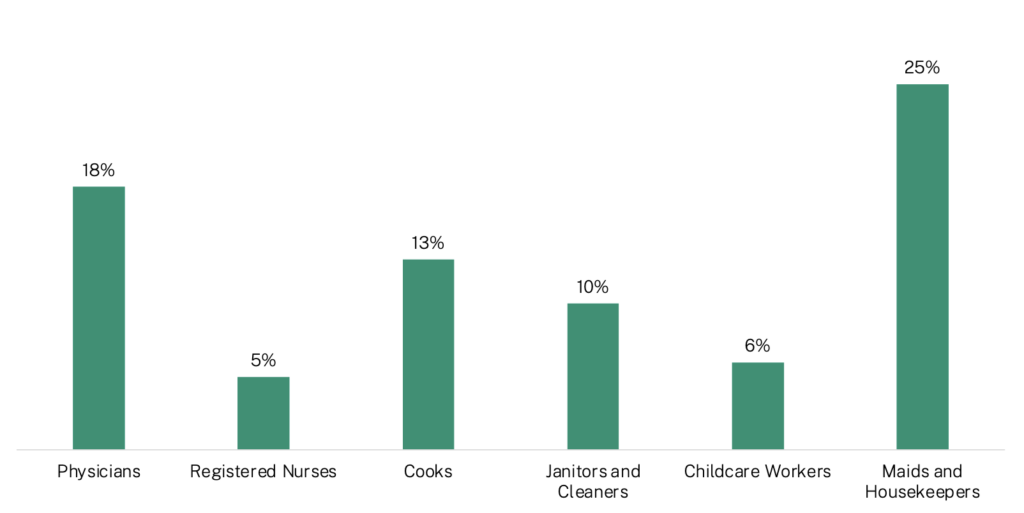
Fig 1. Immigration Research Initiative analysis of 2023 American Community Survey, five-year data.
While physicians and registered nurses may not be at risk of deportation, limits and termination of H1B visas are likely to affect at least some health care professionals, and anyone concerned that ICE agents may think they “look like” an immigrant may also be concerned. In the other fields in Figure 1, a national analysis from the Pew Research Center shows that 12 percent of cooks, 11 percent of janitors, and 24 percent of maids and housekeepers nationally are undocumented.16National estimates of the number of undocumented workers were provided to IRI by Jeff Passel of the Pew Research Center, and are based on an analysis of the 2022 American Community Survey, consistent with the analysis in “What We Know About Unauthorized Immigrants in the U.S.,” Pew Research Center, July 22, 2024.
Some areas of the Tennessee economy that are particularly at risk include:
Restaurants: Immigrants play a big role in Tennessee’s vibrant restaurant industry: in the “front of the house” jobs serving diners, in the “back of the house” jobs in the kitchen, and in so many cases as restaurant owners. In Tennessee, there are 7,000 cooks who are immigrants (including both those who are documented and undocumented)—that’s 13 percent of all cooks in the state. Among chefs and head cooks 2,000 are immigrants (25 percent of the total), among dishwashers 1,000 are immigrants (16 percent).
Personal, home, and office: In Tennessee there are 5,000 janitors who are immigrants, making up 10 percent of the total. There are 7,000 landscaping workers (21percent), 3,000 nail technicians17Nail technicians include manicurists and pedicurists. (68 percent), 800 laundry and dry cleaning workers (26 percent), and 8,000 maids and housekeepers who work in homes, hotels, and other locations (25 percent).
Construction: In Tennessee, there are 44,000 immigrants in the construction industry. Immigrants make up 17 percent of all workers in the construction industry in Tennessee, with many concentrated in jobs as construction laborers or roofers that are critical to the overall construction projects that also employ US-born workers in a wide range of capacities.
Farming: Over half of all crop workers in the United States are immigrants, and the vast majority of the immigrants are either undocumented or seasonal H-2A workers, both categories of immigrants that have been threatened by the incoming administration.18Gutiérrez-Li, Alejandro. “Feeding America: How Immigrants Sustain US Agriculture,” Baker Institute for Public Policy, July 19, 2024. https://www.bakerinstitute.org/research/feeding-america-how-immigrants-sustain-us-agriculture Pay and working conditions are in dire need of improvement for farm workers. But the likely result of deporting current immigrants and restricting new immigration is not an improvement of working conditions, but a decline in farming.
Farms in Tennessee are a source of cattle, milk, soybeans, vegetables and other produce enjoyed around the state and sold for export. Farms are also important to the economic and social vitality of rural communities, enhance the local landscape, and are part of a growing agritourism industry. Eliminating immigrants from farm work would be nearly unimaginable and reducing the number of immigrant workers by even five or ten percent would have dramatic negative consequences.
Fear of deportation is impeding immigrants’ participation in economic and community activities
The current climate of fear is having a broader chilling effect beyond those targeted or at increased risk for deportation, including on immigrants with temporary or provisional work permits and even some who hold green cards or are naturalized citizens. Past research has found that during periods of increased immigration enforcement, even immigrants not targeted for deportation were afraid to leave their homes to participate in everyday activities.19East 2024. The Tennessee bills, if passed, are sure to ramp up a sense of fear that is already pervasive.
Fear is particularly acute for the many immigrants in mixed status families in which some family members are undocumented, and others are US citizens or have another legal immigration status. A survey conducted in December 2024 as people were preparing for the new administration found that 60 percent of respondents in mixed-status families worried about participating in one or more of seven everyday activities, such as going to work, visiting a doctor or hospital, sending children to school, or attending religious services or community events, because they do not want to draw attention to their immigration status or that of a family member.20Hamutal Bernstein, Dulce Gonzalez, and Diana Guelespe, “Immigrant Families Express Worry as They Prepare for Policy Changes,” The Urban Institute, March 12, 2025.
Many immigrants of all statuses are deciding to stay home as much as possible to avoid interactions with immigration authorities. A survey of over 2,000 Spanish-speaking immigrants conducted in March 2025 found that 2 in 5 respondents had to miss work because of the federal government’s new immigration agenda.21Anthony Capote, David Dyssegaard Kallick, Cyierra Roldan, and Shamier Settle, “Responding with Courage: How Spanish-Speaking Immigrants Report Being Impacted by the New Deportation Regime”, The Immigration Research Initiative, May 8. 2025. For more on the how deportation fears harm immigrants, see: Kristina Fullerton Rico, “Deportation fears create ripple effects for immigrants and their communities,” The Conversation, February 19, 2025. As these surveys show, many immigrants are pulling back from economic activities like working or shopping in their local community, avoiding community events, and not engaging in activities vital to their health and mental well-being—all of which harm the immigrants themselves, hurt Tennessee’s economy, and dampen the cultural and community life of this vibrant state.
Immigrants help keep Tennessee economically strong and culturally vibrant
Mass deportation would harm Tennessee’s economy, thwart business activity, and take a devastating toll on immigrant families and communities. Tennessee should reject the overly broad and intrusive policies that will harm both immigrants and US-born people across the state.
Suggested Citation: David Dyssegaard Kallick and Shamier Settle, February 2026, The Economic and Fiscal Impacts of Mass Deportation: What’s at Risk in Tennessee
- 1For the quotation from Sexton and summaries of the proposals, see articles in the Knoxville News Sentinel and Nashville Banner.
- 2The population share by region of the state is based on an analysis of the 2023 American Community Survey 5-year data, to allow for more detailed analysis of local areas than is possible with the 2024 1-year data. Regions of the state are defined by county following the Tennessee’s Department of General Services definitions.
- 3Carl Davis, Marco Guzman, and Emma Sifre, “Tax Payments by Undocumented Immigrants,” Institute on Taxation and Economic Policy, July 30, 2024.
- 4The total population, number of immigrants, and number of non-citizens is drawn from an Immigration Research Initiative analysis of the 2024 American Community Survey, the most recent detailed data available. The estimate of immigrants who are undocumented is shown in the Immigration Research Initiative fact sheet, “50 States: Immigrants by Number and Share.” The three leading sources of estimates of people who are undocumented are shown there, from the Pew Research Center, the Center for Migration Studies, and the Migration Policy Institute; all three use 2023 data for their most recent estimates. For Tennessee, all three estimates are 180,000 plus or minus 10,000 (ranging from 176,000 to 190,000).
- 5Jesús Villero, Brendan Warshauer, and Youran Wu under the direction of Alex Arnon, “550,000 Workers Lose Status by End of 2025: Potential Impact by State and Industry”, Penn Wharton Budget Model, November 19, 2025.
- 6Hamed Aleaziz, “Trump Administration Aims to Strip More Foreign-Born Americans of Citizenship” New York Times, December 17, 2025.
- 7Tara Watson and Jonathan Zars, “100 days of immigration under the second Trump administration,” Brookings Institution, April 29, 2025.
- 8Immigrant share of economic output is estimated by showing the share of all earned income – wages plus proprietors’ earnings. The data source is the 2023 American Community Survey, five-year data.
- 9IRI Analysis of 2023 American Community Survey, five-year data.
- 10See Carl Davis et al, Tax Payments by Undocumented Immigrants, cited above.
- 11David J. Bier, Michael Howard, and Julián Salazar, Immigrants’ Recent Effects on Government Budgets: 1994–2023, Cato Institute, February 3, 2026.
- 12Economic and Fiscal Impact of Immigration, National Academies of Sciences, Engineering, and Medicine, The Economic and Fiscal Consequences of Immigration (National Academies Press, 2017).
- 13East, et al. “The Labor Market Effects of Immigration Enforcement,” Journal of Labor Economics, vol 41, number 4. This work is summarized in an accessible fashion by Chloe N. East in “The Labor Market Impact of Deportations” The Hamilton Project, Sept. 18, 2024.
- 14See, for example, Ben Zipperer, “Trump’s Deportation Plans Threaten 400,000 Direct Care Jobs,” Economic Policy Institute, December 15, 2025.
- 15Chloe East, “The Labor Market Impact of Deportations,” The Hamilton Project, September 18, 2024.
- 16National estimates of the number of undocumented workers were provided to IRI by Jeff Passel of the Pew Research Center, and are based on an analysis of the 2022 American Community Survey, consistent with the analysis in “What We Know About Unauthorized Immigrants in the U.S.,” Pew Research Center, July 22, 2024.
- 17Nail technicians include manicurists and pedicurists.
- 18Gutiérrez-Li, Alejandro. “Feeding America: How Immigrants Sustain US Agriculture,” Baker Institute for Public Policy, July 19, 2024. https://www.bakerinstitute.org/research/feeding-america-how-immigrants-sustain-us-agriculture
- 19East 2024.
- 20Hamutal Bernstein, Dulce Gonzalez, and Diana Guelespe, “Immigrant Families Express Worry as They Prepare for Policy Changes,” The Urban Institute, March 12, 2025.
- 21Anthony Capote, David Dyssegaard Kallick, Cyierra Roldan, and Shamier Settle, “Responding with Courage: How Spanish-Speaking Immigrants Report Being Impacted by the New Deportation Regime”, The Immigration Research Initiative, May 8. 2025. For more on the how deportation fears harm immigrants, see: Kristina Fullerton Rico, “Deportation fears create ripple effects for immigrants and their communities,” The Conversation, February 19, 2025.